Covering Tyneside, Wearside, County Durham and Northumberland [email protected] 0191 666 0397
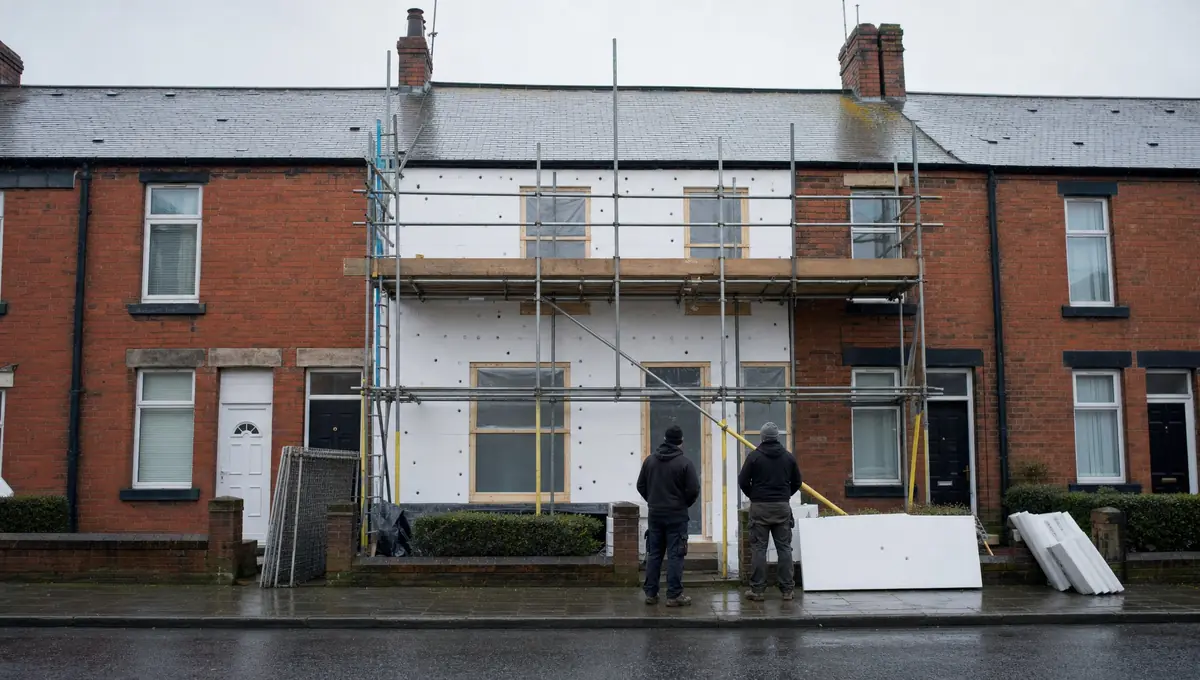
Victorian brick terrace where one house has white insulation boards fixed to its front wall behind scaffold, with two installers looking up from the pavement

Losing Heat Through Your Walls? We Fix That

External Wall Insulation Services in Bishop Auckland

External Wall Insulation Installers for Solid Brick Homes

Lower Energy Bills for Terraces, Semis and Period Homes

  • Free no obligation quote
  • Solid brick homes
  • Insulation, base coat and render
Free survey request

Book a free visit

No obligationWritten quote
We only use your details to reply

SystemBoard, mesh, finishmatched parts tested as a full set
Best forSolid brick wallsterraces, semis and period homes
Time on siteTwo to four weeksfor most homes
PriceWritten quoteafter we survey your walls

TyneRend provides external wall insulation services across Bishop Auckland for homeowners with cold rooms and high energy bills. We fit insulation boards to the outside of your home and finish them with a new render.

As a hands-on external wall insulation company, we work on Victorian terraces, 1930s semis, farm cottages and ex-council houses. If your home has solid walls and the heating never catches up, this page is for you.

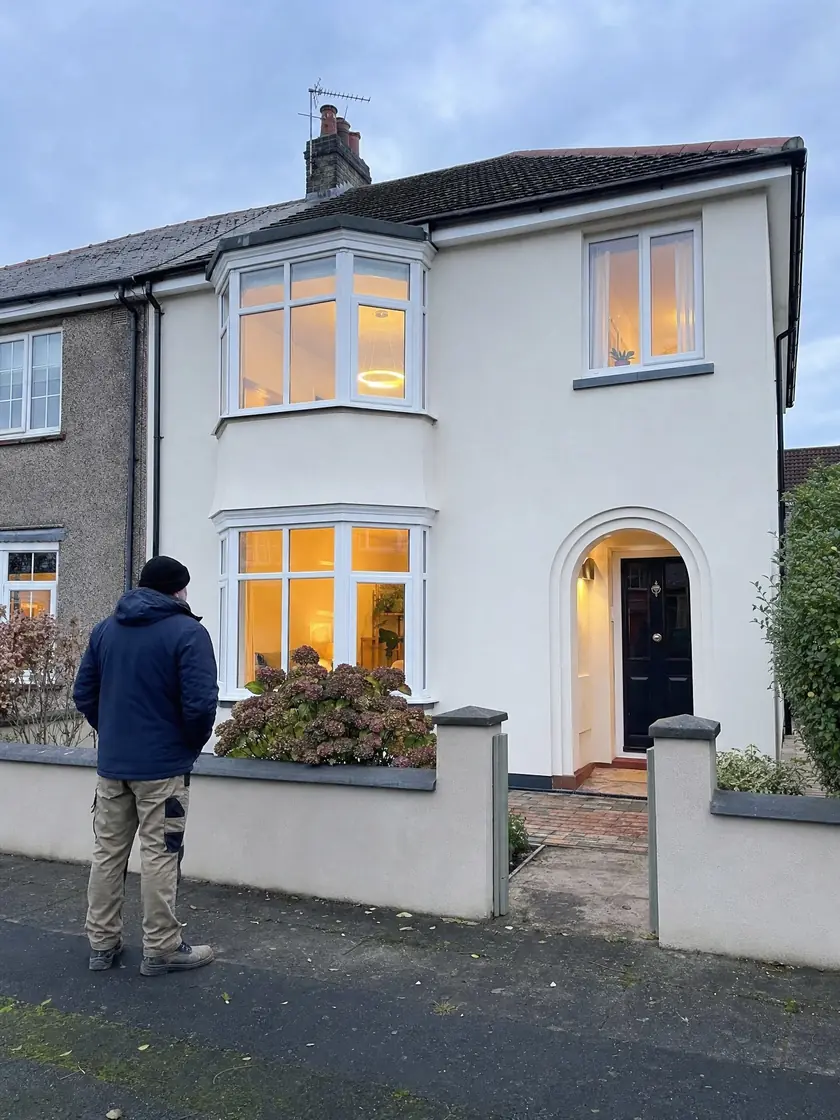
Semi-detached house with a bay window and smooth cream render, warm lights on inside, next to a grey pebble dash neighbour
Insulated and rendered semi
Working in Bishop Auckland

Insulating the Outside Walls in Bishop Auckland

The draft Bishop Auckland Conservation Area Management Plan says planning permission is needed in the conservation area for works that materially affect a building's appearance, including cladding such as external insulation. It also stresses that historic buildings were built to breathe and should stay that way. Insulating the outside walls of an old building there needs careful thought.

Beyond the historic core, the settlement character study says sizeable estates of brick housing were built through the mid-20th century on former industrial land between the old Roman Road and the River Gaunless. Homes like that are more common candidates for external wall insulation. The survey checks the walls, window reveals, sills and roof line before any system is suggested. For the national rules on cladding, see the Planning Portal external walls guide.

Help with costs is available for some. Durham County Council has £2 million of government funding to improve the energy efficiency of around 140 homes across the county over three years, and offers the Warm Homes: Local Grant.

Insulating or cladding a wall?Tell us the address and which walls are involved. We will check the area for planning rules before the work is priced.
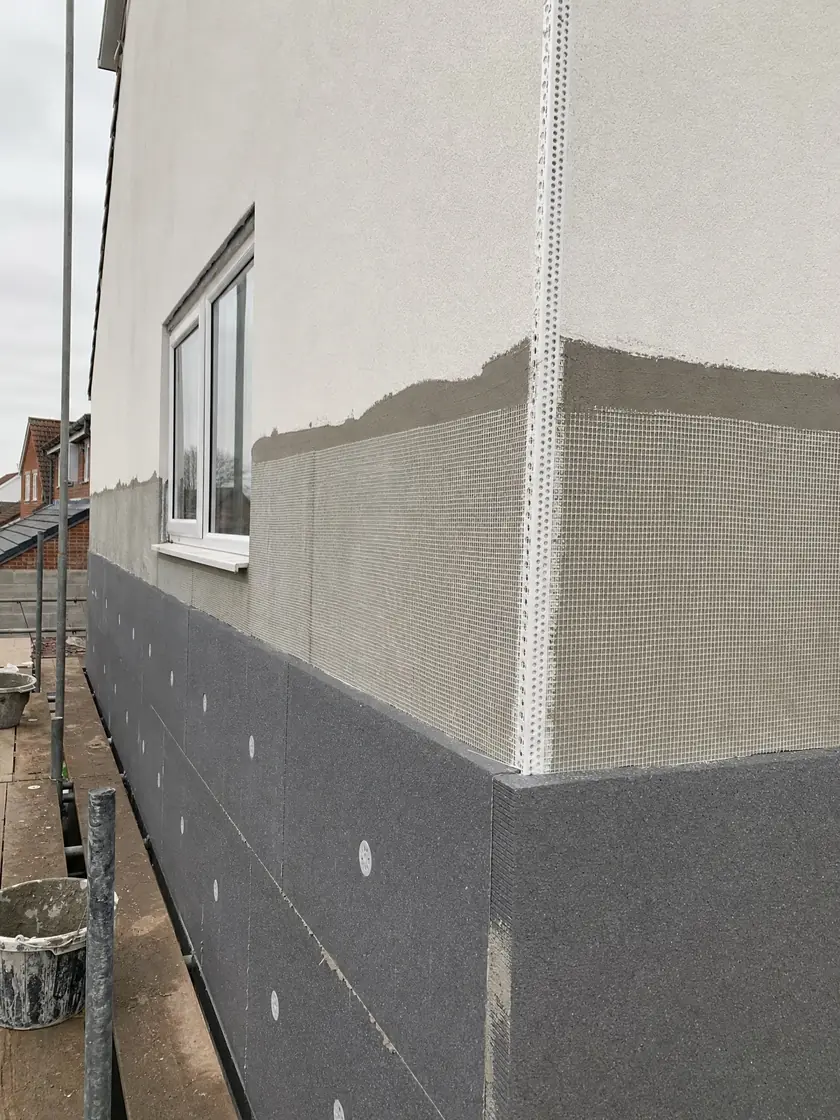
House wall corner with grey insulation boards below, white mesh in a base coat above and a pale finished coat at the top
Board, mesh, base coat, finish

What Does External Wall Insulation Involve for Your Home?

External wall insulation, or EWI, means fixing boards to the outside of your home. We add a base coat, mesh and a weatherproof finish. It is mostly used on older properties with solid walls built before the 1920s, and it wraps your external walls in a warm skin.

In England, about 15% of homes built before 1919 already have it, against 1% to 8% of homes built from 1945 onwards. Terraces lead at roughly 7%, semis at 5% and detached houses at 2%.

People call us when a Victorian terrace has icy bedrooms, when a landlord needs a better EPC rating, or when old render is failing.

Cold rooms and high bills?Send us your address and we will survey the walls and tell you if insulation suits them.

Is External Wall Insulation a Good Idea for Your Home?

For most older brick homes, yes. It cuts heat loss, lowers energy bills and protects the brickwork. Homes with cavity walls often suit cheaper cavity insulation, and we only fit external insulation where it makes sense. At the end of 2025, Great Britain had an estimated 8.5 million solid wall homes. Only 909,000, around 11%, had solid wall insulation, leaving about 7.6 million without it.

What Are the Benefits of Wall Insulation on the Outside?

Around 33% of a property's heat escapes through uninsulated walls. EWI can cut external wall heat loss by up to 45%, so your boiler works less, heating costs fall and energy efficiency rises. Government data for England and Wales found a median 17% fall in gas use in the first year after solid wall insulation, and the drop was still there five years later.

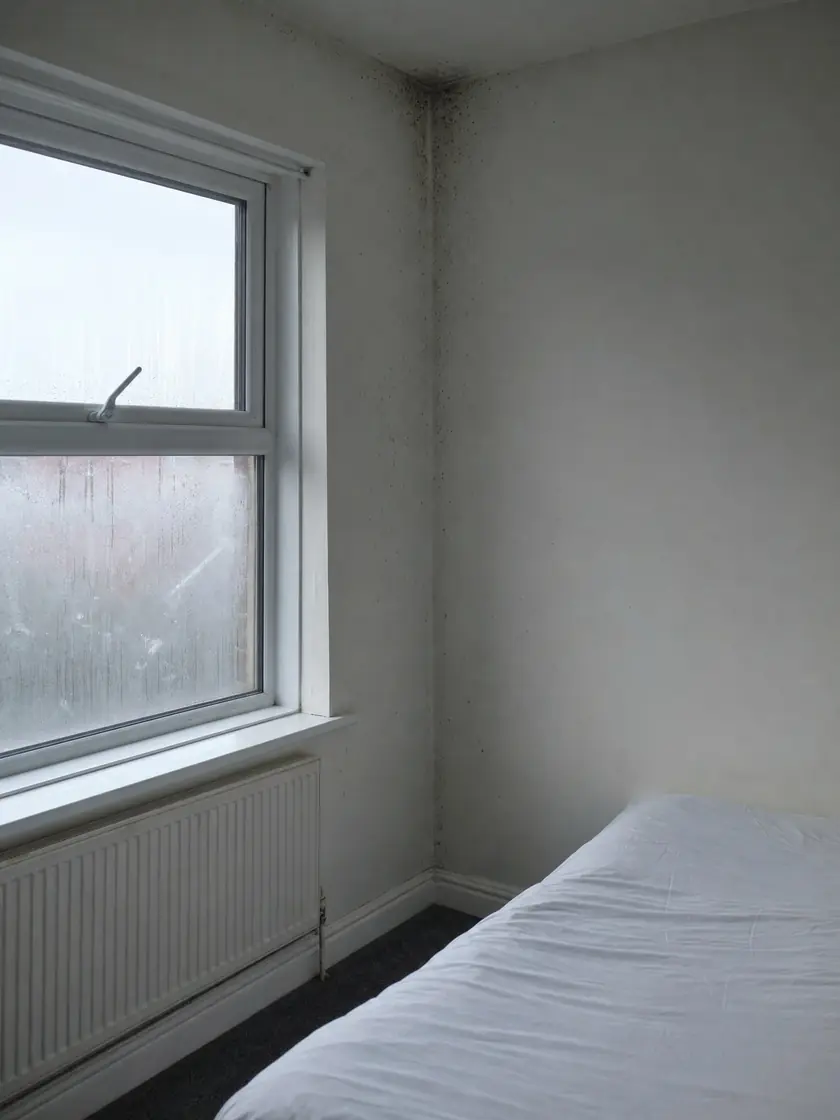
Some households save up to £660 a year on energy bills, and the best results can cut heating bills by up to 50%. The boards also stop thermal bridging and cold spots, so you get less condensation and mould. In England, homes with uninsulated walls were more than twice as likely to have damp, at 8% against 3%.

Rooms stay steadier in winter and cooler in summer. Better energy efficiency also lifts your EPC rating, which helps you sell or rent an energy efficient home. It is one of the eco friendly solutions, with lower carbon emissions.
How Does It Protect Your Home's Exterior?

Rain, frost and thermal stress hit your exterior walls hard. The boards and finish shield the brickwork, which can help your building last longer, and a fresh finish lifts your home's exterior with modern colours.

External insulation does not reduce internal floor space, and your internal walls, sockets and radiators stay put. It can also cut outside noise.

What Are the Downsides of External Wall Insulation?

Cost is the big one, and scaffolding costs add to the bill. The walls get thicker, so sills, eaves and downpipes need extra work, and the look of your home changes. A listed property needs consent, and some brickwork suits internal wall insulation better, though that takes room space and means moving sockets along internal walls.

Badly fitted boards can let water in, so pick EWI installers who show you their work.

Bedroom corner with condensation running down the window and dark mould speckled along the wall and ceiling corner
Cold walls, damp corners
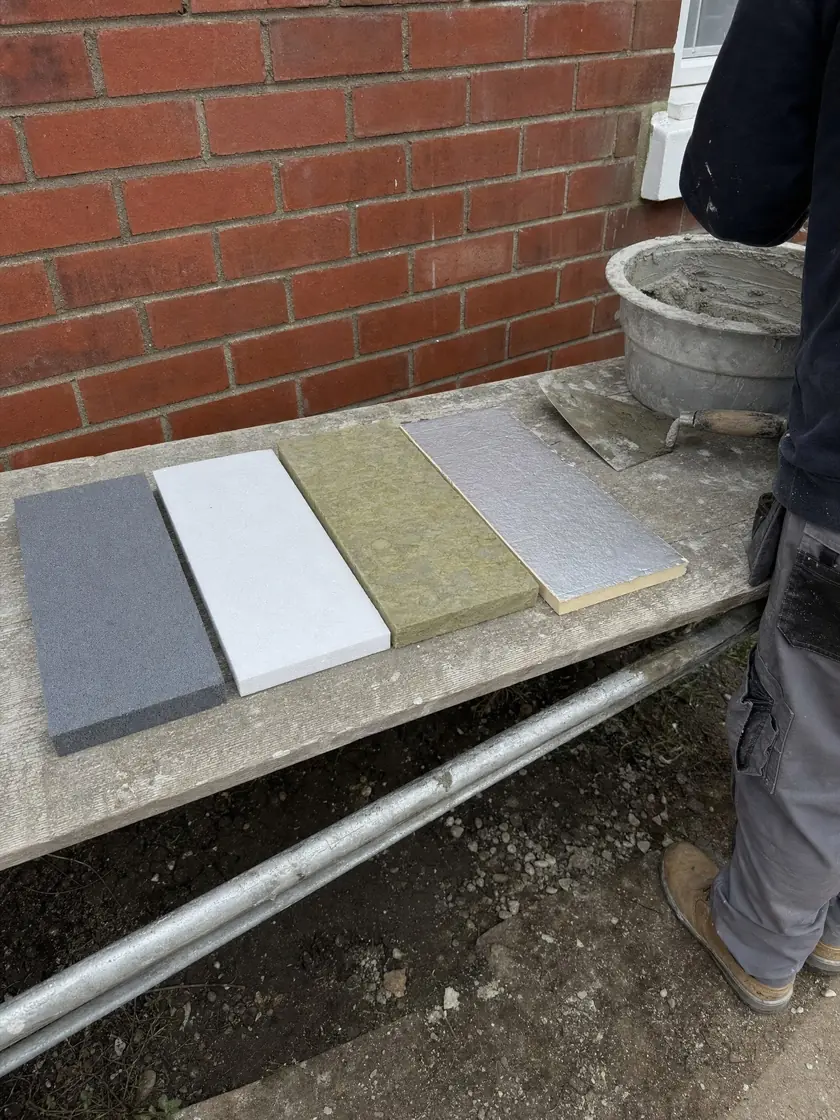
Four insulation board offcuts on a scaffold board: grey polystyrene, white polystyrene, mineral wool and foil-faced phenolic
Board options

Which Insulation Material and Finish Will We Use?

We pick the insulation material to suit your home. Most projects use expanded polystyrene, often graphite boards that insulate better at the same thickness. Mineral wool is fire resistant and suits taller homes, and phenolic foam gives high thermal performance in a thin board.

Silicone render, one of our rendering services, is a popular finish because it sheds rain. Every external wall insulation system we fit uses matched parts, and we only use external wall insulation products tested as a full set. Good EWI systems give the highest quality in every layer.

How Thick Should External Wall Insulation Be?

Most homes get 70mm to 120mm, and about 100mm is common. Thin phenolic boards reach similar thermal efficiency at around 60mm. Tight joints matter as much as the insulation for thermal performance, so we set the thickness after the survey.

Survey firstKnow what your walls needWe check the brick, any cavity, damp, gutters and windows before we plan the boards and the finish.
Property assessmentWalls, gutters and windows checked
Clear priceSent in writing after the survey

What Is the EWI Installation Process From Survey to Handover?

Our EWI installation process takes two to four weeks for most homes. It starts with a consultation and property assessment by our EWI specialist. They check your exterior walls, any cavity walls, damp, gutters and windows, and we plan ventilation and moisture control before we install external wall insulation.

Our external wall insulation installers then follow this installation process:

  • We put up scaffolding and repair loose brickwork.
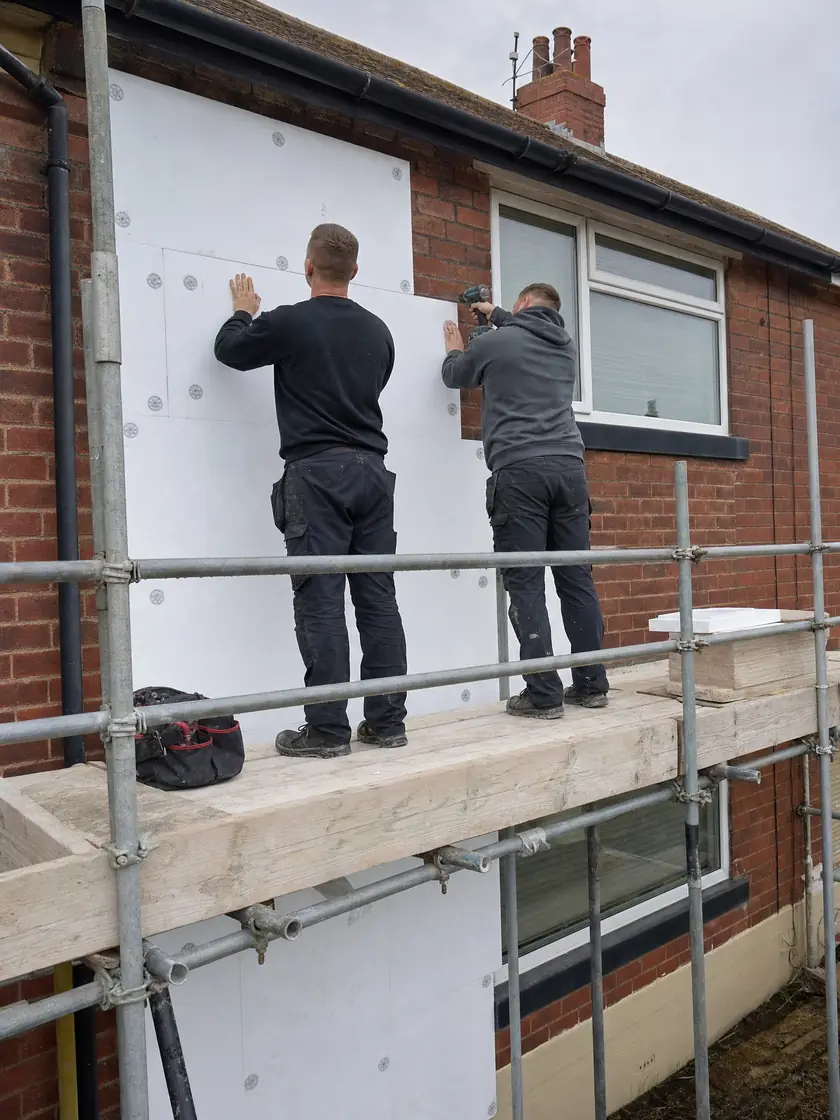
  • We bond the boards to your walls.
  • We apply the base coat with mesh, then the finish.
  • We clear the site and hand over your guarantee.
Two installers on scaffold fixing white insulation boards to a red brick house wall, one holding a drill
Boards going on

How Much Does External Wall Insulation Cost in Bishop Auckland?

Here are our rough prices based on recent projects. Most projects work out at about £135 per m², and the range runs from about £110 to £160 per m². Premium boards or brick slip finishes can push the rate up to £150 to £200 per m². Here is what that means for a whole home:

  • Flat or maisonette: £5,000 to £9,000
  • Mid-terrace: £6,000 to £10,000, usually around £8,000
  • Semi-detached: £10,000 to £16,000, usually around £13,000
  • Detached: £17,000 to £28,000, usually around £22,000

These prices are a rough guide, and the actual cost varies with wall area, access, scaffolding, the finish you choose and the state of your walls. Please use our contact form for an accurate quote.

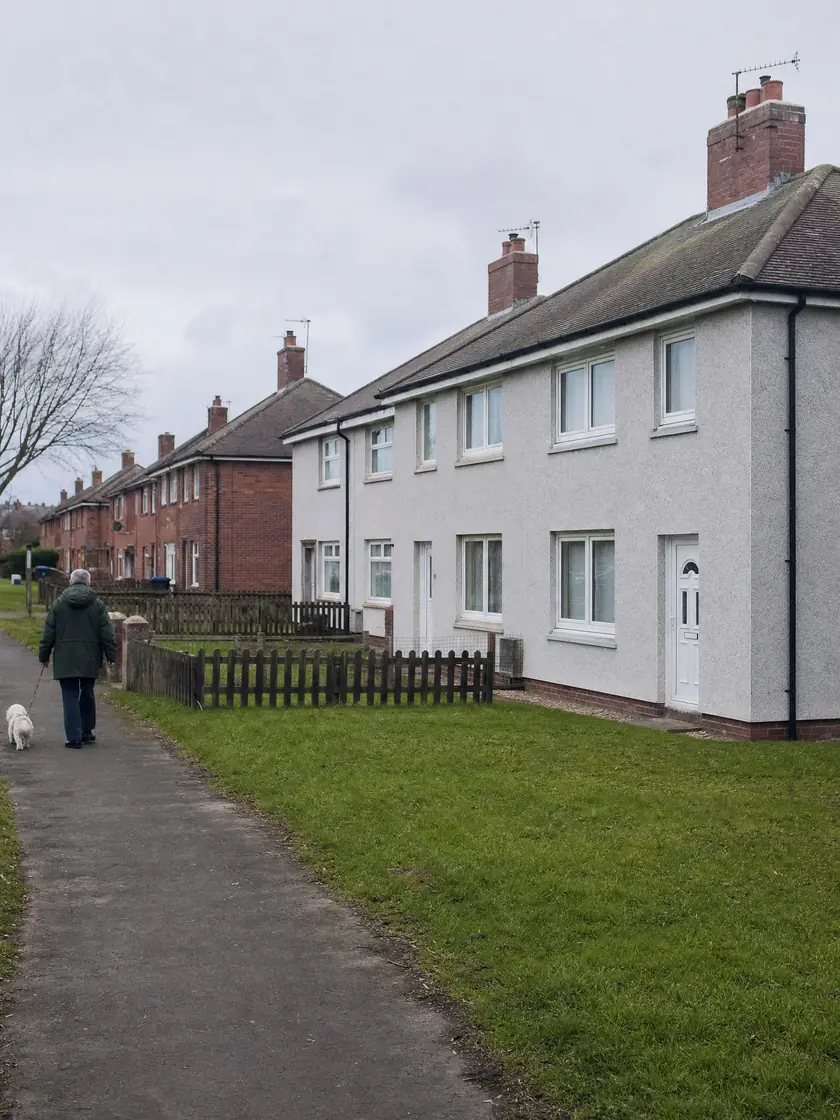
Row of ex-council houses with the near pair in light grey textured render and the others in red brick, beside a grass verge
Ex-council street

Can You Get External Wall Insulation for Free?

Usually not. Some households get help through government backed schemes, depending on your income, EPC rating and the scheme running. ECO4 had delivered around 85,400 internal and external wall measures by the end of March 2026. We cannot promise you will qualify, so check the official government pages first.

Ready for a warmer home?One call starts a free survey and a no obligation quote across Bishop Auckland.

Do You Need Planning Permission for External Wall Insulation?

Often you do not, but it depends on where you live. Building Regulations still apply, and we deal with that for you.

Rules are tighter in the following locations: national parks, listed streets and areas with an Article 4 direction. A conservation area often means the council wants a say on colours and finishes. Listed buildings need consent, and EWI is often not allowed at all.

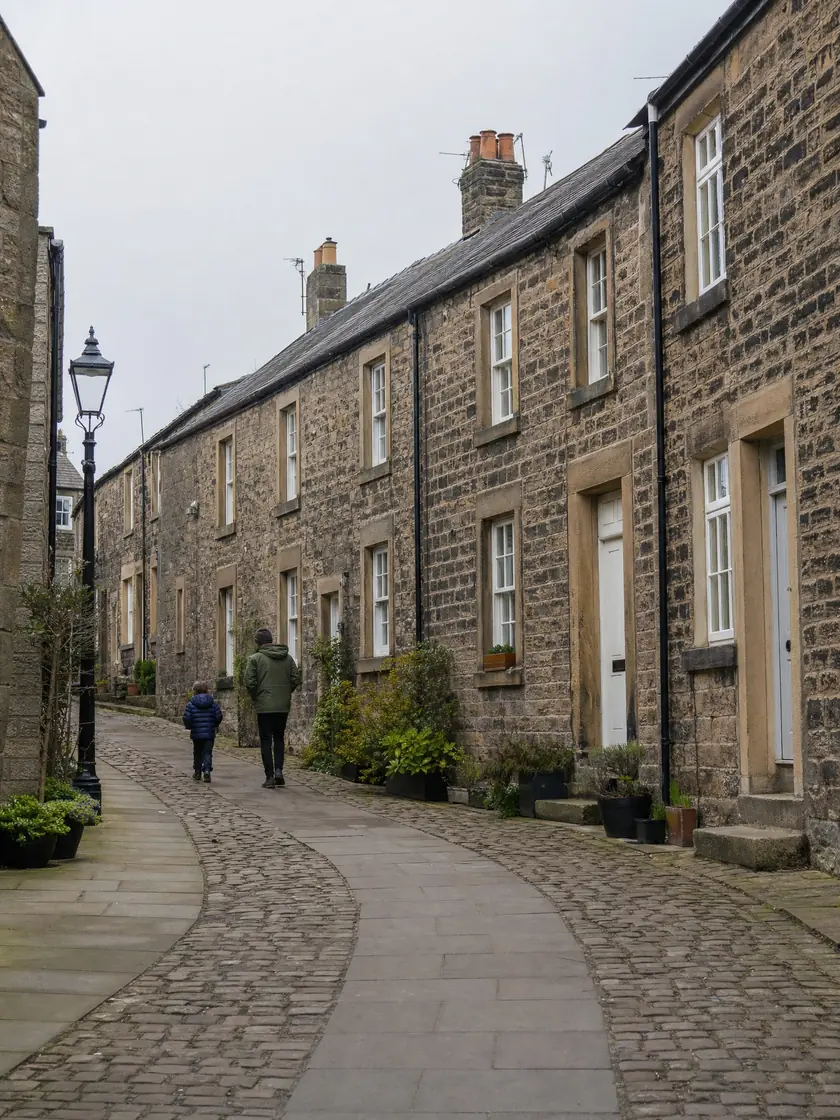
Narrow cobbled street of period stone terraced houses with white sash windows
Older streets, check first
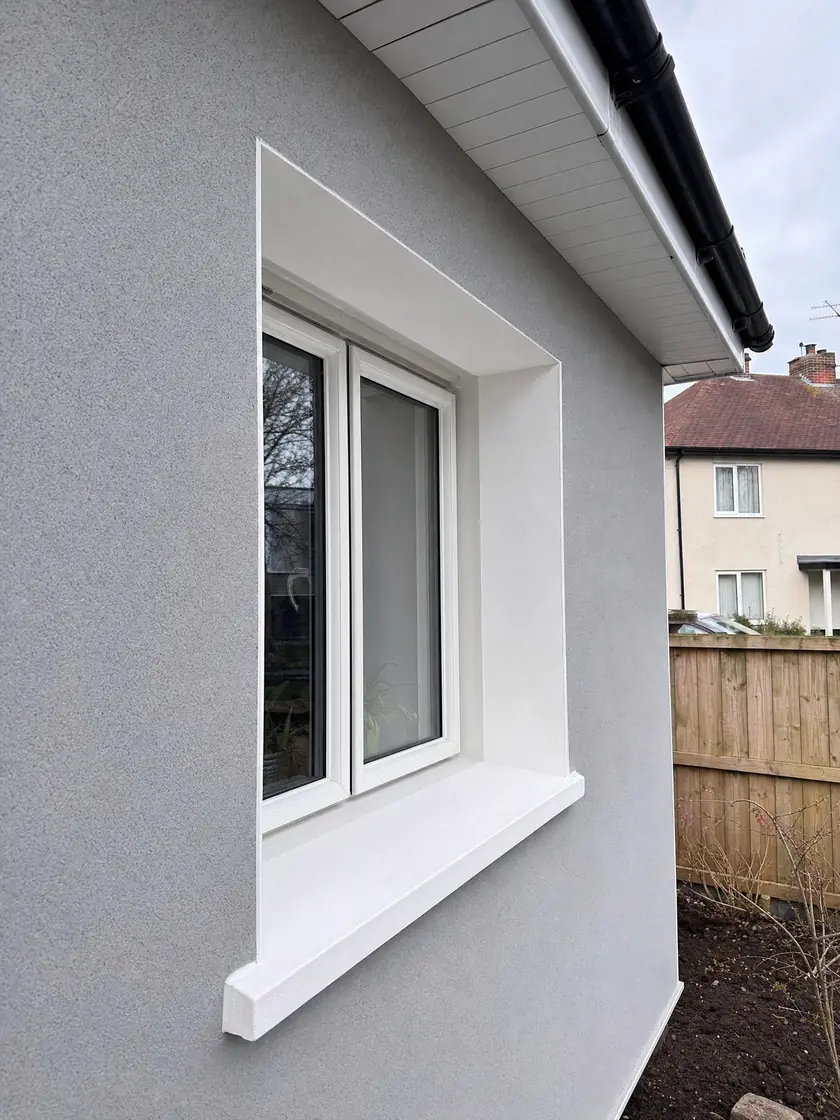
Window set in a deep smooth white reveal with a new white sill on a grey rendered wall
Reveals and sills done properly

Why Choose TyneRend as Your External Wall Insulation Company?

We are a team of external wall insulation installers who do this work every day. Some external wall insulation contractors quote fast and vanish after the last coat, but as rendering specialists, we stay in touch after handover.

What Guarantees and Advice Do We Give?

Every project comes with insurance backed guarantees, and we show you the paperwork before you sign. You get tailored advice based on your walls, and we also take on larger projects, like a full terrace, which can share the cost of scaffolding. Ask to see our reviews from previous customers.

Not sure it suits your home?We only fit external insulation where it makes sense, and we will tell you straight.

Get a Free External Wall Insulation Quote From TyneRend Today

Use our contact form and tell us your address. TyneRend will survey your walls and send a clear price. Our no obligation quotes are free.

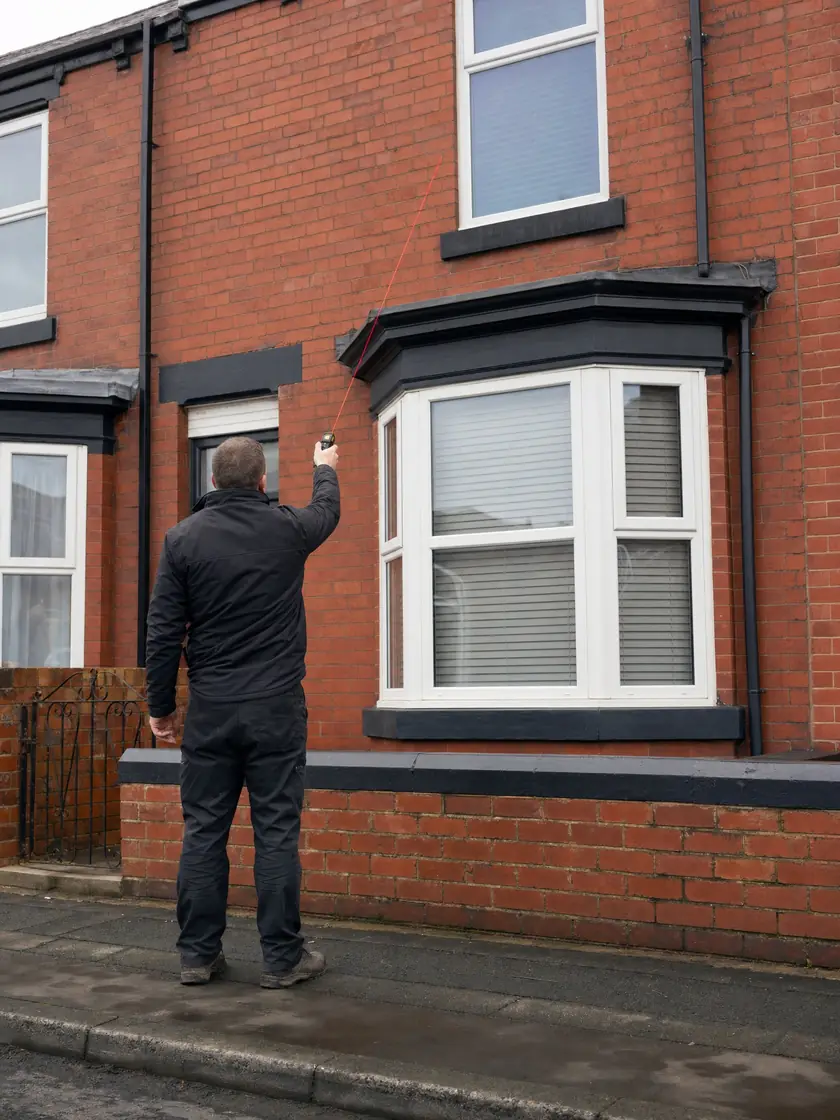
Surveyor seen from behind pointing a laser measure up the front wall of a red brick terraced house
Survey before the price
Insulation questions

Asked on almost every survey

How much does external wall insulation cost in Bishop Auckland?

External wall insulation costs about £135 per m² on most projects, with a range from about £110 to £160 per m². For a whole home, a mid-terrace is usually around £8,000 and a semi-detached around £13,000. These prices are a rough guide, and the actual cost varies with wall area, access, scaffolding, finish and the state of your walls, so use our contact form for an accurate quote.

Is external wall insulation worth it?

External wall insulation is worth it for most older brick homes, because it cuts heat loss, lowers energy bills and protects the brickwork. Government data for England and Wales found a median 17% fall in gas use in the first year after solid wall insulation. Homes with cavity walls often suit cheaper cavity insulation, so we only fit external insulation where it makes sense.

How much can external wall insulation save on energy bills?

External wall insulation can save some households up to £660 a year on energy bills, and the best results can cut heating bills by up to 50%. It can also cut external wall heat loss by up to 45%, so your boiler works less. These figures are a rough guide, and the actual cost and savings vary with your home.

How long does external wall insulation installation take?

External wall insulation installation takes two to four weeks for most homes. It starts with a consultation and property assessment by our EWI specialist, then we put up scaffolding, bond the boards, apply the base coat with mesh and the finish, clear the site and hand over your guarantee.

Do you need planning permission for external wall insulation?

You often do not need planning permission for external wall insulation, but it depends on where you live. Building Regulations still apply and we deal with that for you, while national parks, listed streets and areas with an Article 4 direction have tighter rules. Listed buildings need consent, and external wall insulation is often not allowed at all.

Can you get external wall insulation for free?

You usually cannot get external wall insulation for free, although some households get help through government backed schemes depending on income, EPC rating and the scheme running. We cannot promise you will qualify, so check the official government pages first. Our no obligation quotes are free.

Tired walls? Let us take a look.

External wall insulation across Bishop Auckland, with a free no obligation quote after we survey your walls.

Free survey
Call Free quote