Covering Tyneside, Wearside, County Durham and Northumberland [email protected] 0191 666 0397
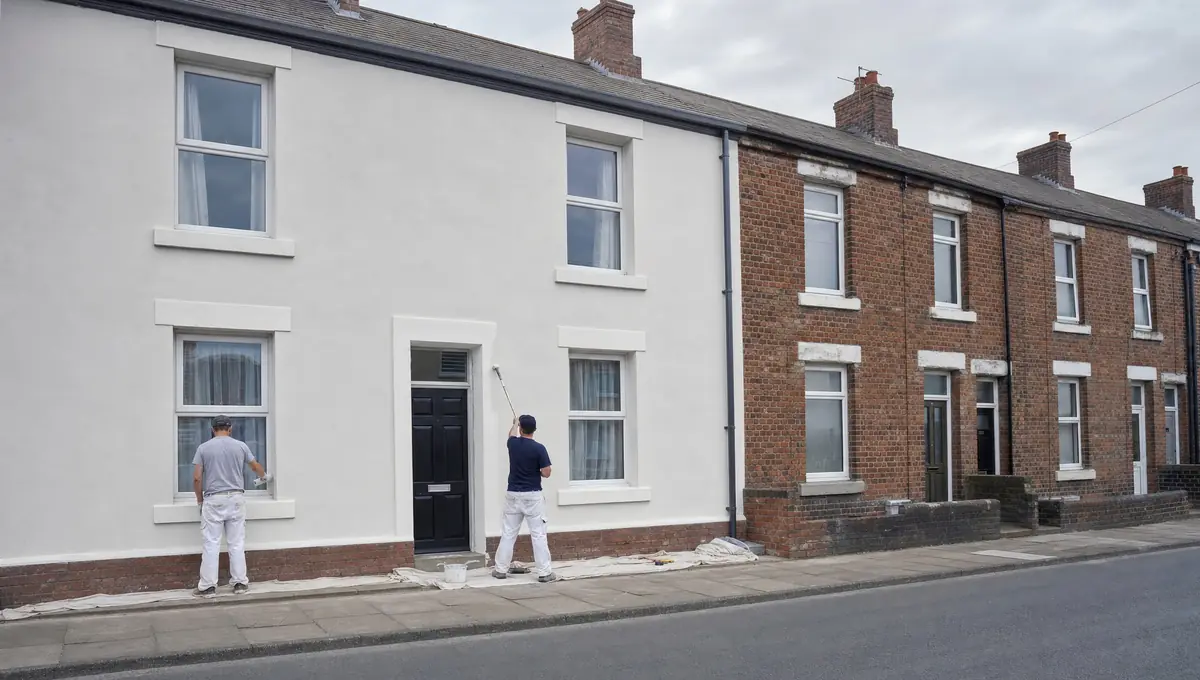
Terrace house rendered and painted soft white beside bare red brick houses, two painters at work seen from behind

Tired Exterior Walls? We Fix Them With Cement Render

Sand and Cement Rendering Services in Sunderland

Sand and Cement Rendering Company for Sunderland Homes

Sand and Cement Rendering Specialists for Terraces, Semis and Bungalows

  • Free visit and quote
  • Terraces, semis and bungalows
  • Mixed and applied by us
Free survey request
Book a free visit

No obligationWritten quote
We only use your details to reply

Mix6 sand to 1 cementplus water, clean sharp sand
CoatsScratch coat, top coatleft to set between layers
FinishSmooth, textured, spongedtrowel, texture or sponge
PaintingMasonry paintrepaint every 5 to 10 years

Our sand and cement rendering services cover homes throughout Sunderland, giving them a hard, weather-resistant coat that can last for decades. We work on terraced houses, semis, detached homes, bungalows and extensions, and we fix external walls that are split, crumbling or soaking up rain.

At TyneRend, we're a sand and cement rendering company that mixes, applies and finishes every job ourselves. Many homeowners call us after a vague quote. We assess each property first and advise you on the best plan.

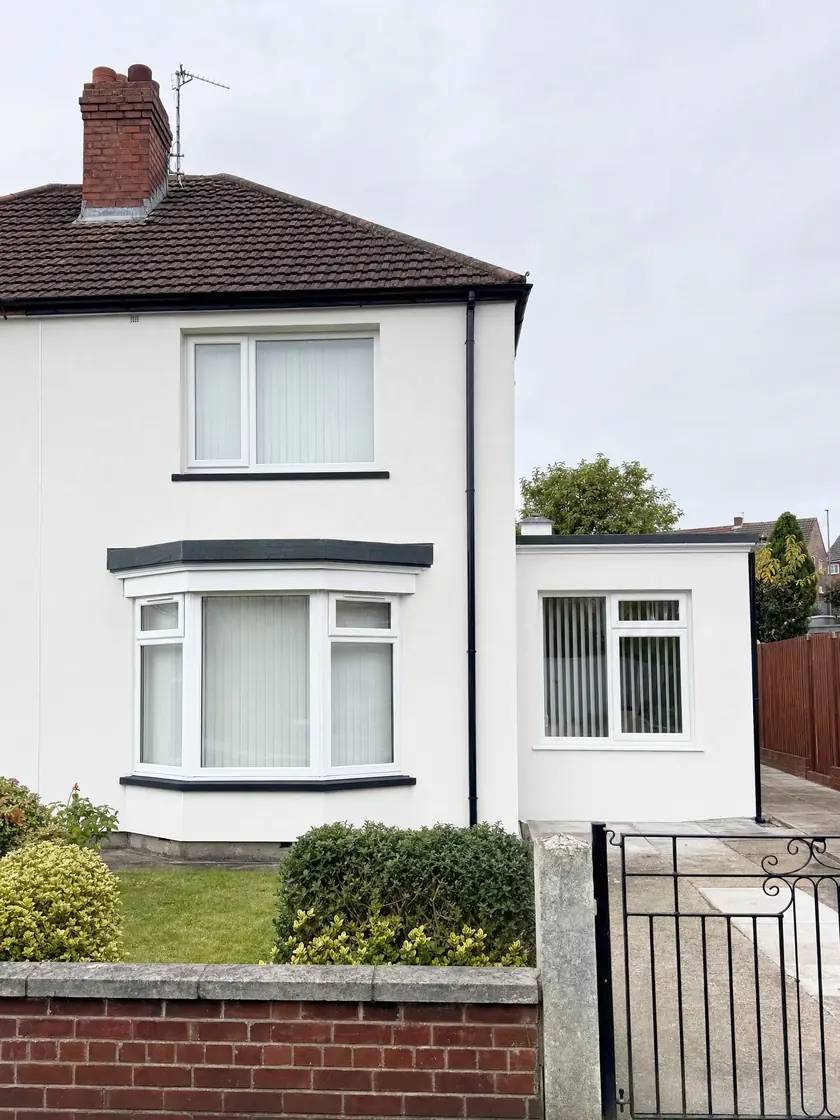
Semi-detached house with smooth float-finished render painted white, a matching single-storey side extension, a bay window and a tiled roof
Houses and extensions
Working in Sunderland

Rendering Your House in Sunderland

The Census counts 55,039 semi-detached and 35,518 terraced homes in Sunderland. In the conservation areas, the appraisals record a lot of render. In Ryhope Village and Newbottle Village, some stone-built houses are rendered, either in a smooth lime render or rough cast, and the Ryhope appraisal says the Wilderness and the Chestnuts are distinguished by their pebble-dashed elevations.

Render is not always welcome, though. In St. George's Terrace, Roker, the appraisal says the use of render is very intrusive and has destroyed the harmony of the terrace. In Ashbrooke, Article 4(2) directions on terraces including Azalea Terrace North, Belle Vue Park and The Elms West bring cladding any part of the exterior under planning control. So we check the street first, then survey the wall and prepare it properly.

Rubble needs planning too. Pallion Household Waste and Recycling Centre on European Way needs an appointment, takes no more than six bags of soil or rubble, and the council says it cannot be used by businesses or landlords clearing properties. Waste from a paid job is something to agree with us before work starts.

Planning to render your house?Send us the address and we will check whether the street is in a conservation area before the work is planned.
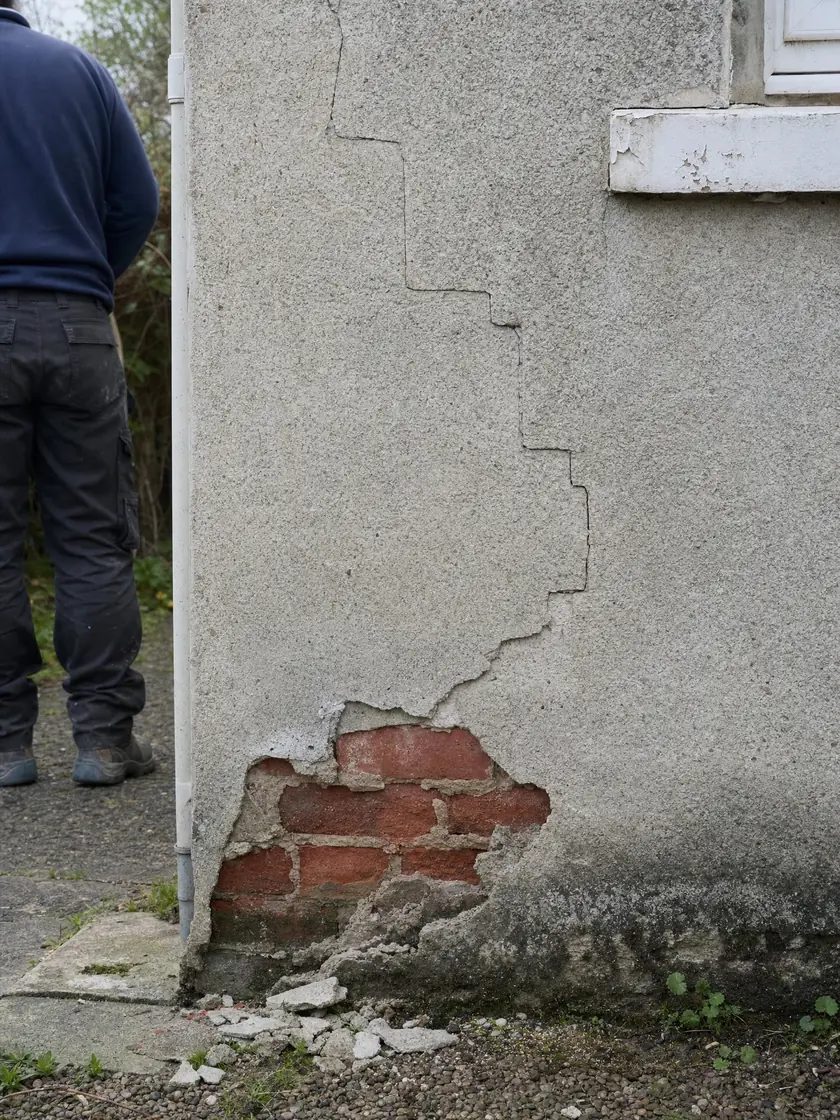
Old grey render crumbling at the base of a brick wall, with a stepped crack following the mortar joints and a patch fallen away to show red brick
Cracked and crumbling

What Problems Do Our Cement Rendering Services Solve?

Cracked, Damp or Crumbling Walls We Repair

A cement render crack lets rain in behind the surface, and damp spreads through the brickwork. Surveyors found serious damp in around 1.4 million English homes in 2024, about 5% of the housing stock.

Cracking often starts where mortar joints have moved, so we repoint them. If damp has reached your internal walls, we trace the source first.

Which Older Homes Need Sand and Cement Render?

England has around 8.9 million homes built before 1945, and almost two-thirds have uninsulated solid walls. Traditional sand cement render is commonly used on older properties, while traditional rendering in lime can be more suitable for some period homes, which is where our lime rendering specialists can help.

Cracked, damp or crumbling walls?Tell us what you can see and we will arrange a free visit.

What Is Sand Cement Render and Why Pick It?

Sand cement render is a mixture of building sand, cement and water, trowelled on in layers as an external render. It sets hard and forms a durable protective layer on exterior walls.

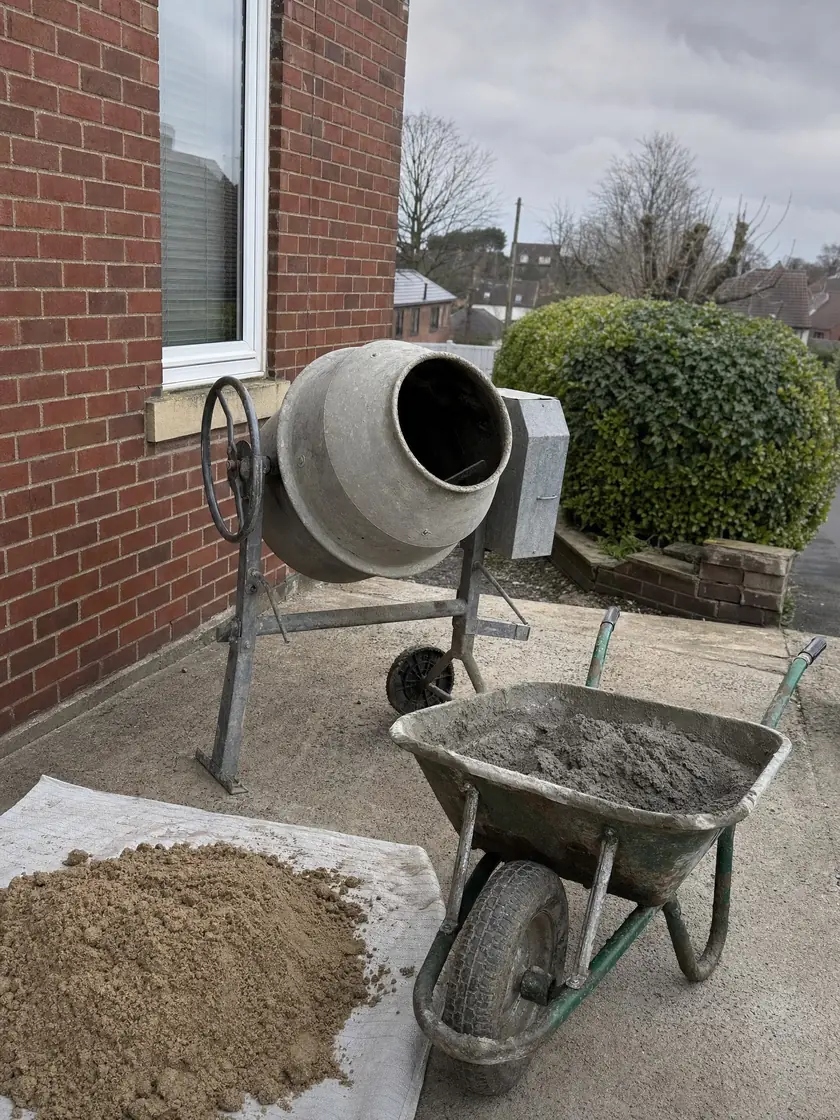
Our sand cement mix is 6 parts sand to 1 part cement, plus water. We use clean, sharp sand and fresh cement, because poor material gives a weak render. We keep the mixing process steady and hold every job to the highest standard.

What Benefits Come With Sand Cement Render?

  • Sand cement render is an affordable option that fits most budgets.
  • It's non-combustible, which adds fire safety.
  • It lifts kerb appeal and market value.
Grey cement mixer and a green wheelbarrow of fresh grey render mortar beside a heap of sand on a sheet, in front of a brick wall
Sand, cement and water
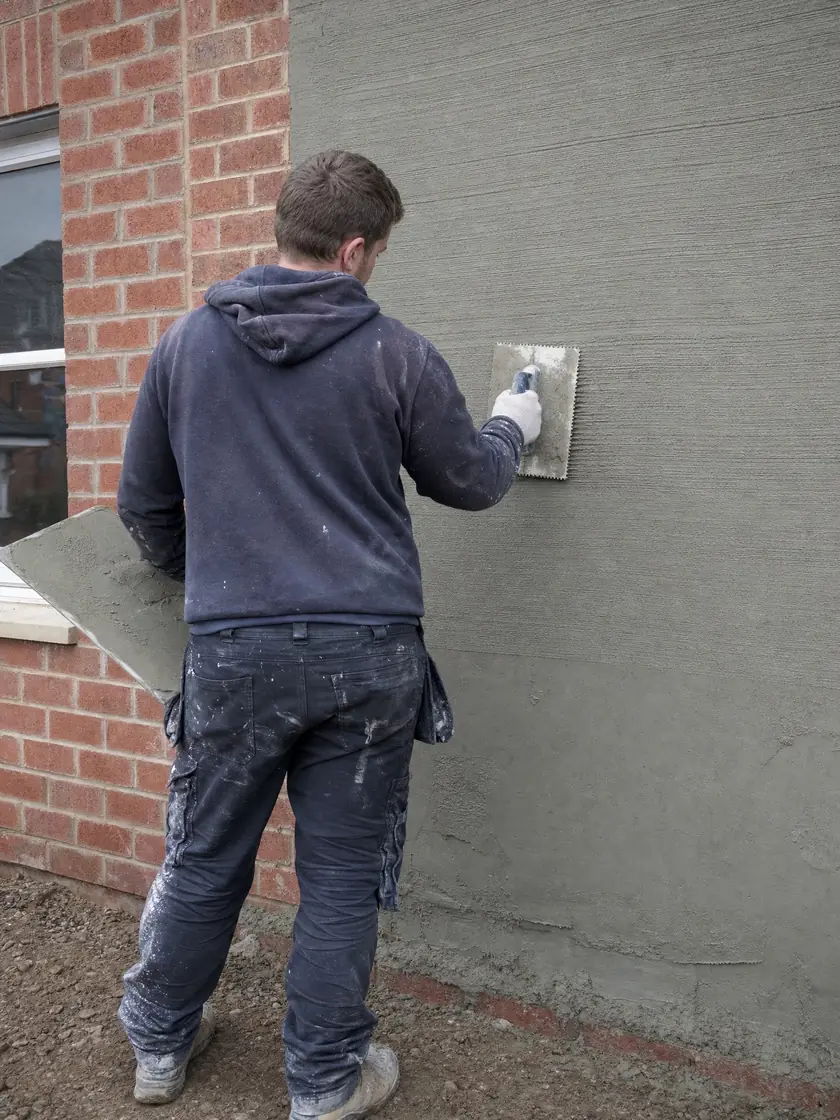
Plasterer in a navy hoodie seen from behind, combing a fresh grey scratch coat on a house wall next to brickwork
Scratch coat scored

How Sand Cement Rendering Works From Start to Finish

Survey, Repairs and Preparation Come First

We check the wall structure for damp and movement, then give you a quote. Before any sand cement rendering, we remove failed cement render, clean the surface and repair gaps.

Existing render in good condition may only need repair. If you want external wall insulation, tell us early, because it changes the plan.

What Is a Scratch Coat, and How Long Before the Top Coat?

Our scratch coat rendering services start with the first coat of sand cement rendering, applied 9mm to 16mm thick. While it's soft, we score it to give the next layer a key. Some firms call this scratch back rendering.

We leave each layer two to seven days to set, depending on the season. We mist walls in summer so they dry slowly. Traditional sand and cement render cracks if you rush it.

Top Coat Finish Options: Smooth, Textured or Sponged

The final coat of sand cement rendering goes on 3mm to 9mm thick, and we finish it to the highest standard. We offer a range of finishes, each with its own texture. A trowel finish gives a smooth render, which we achieve with a straight edge.

A textured finish adds visual appeal, and a sponge finish gives a distinctive pattern. Roughcast uses aggregate thrown on, and pebbledash uses pebbles added after. We apply different types of finish and create a look that matches your street.

Free visitWe look before we quoteWe check the walls for damp and movement, then give you a written quote after a free visit.
Damp and movementChecked before any quote
Written quoteSent after the free visit

Will Sand and Cement Render Need Painting?

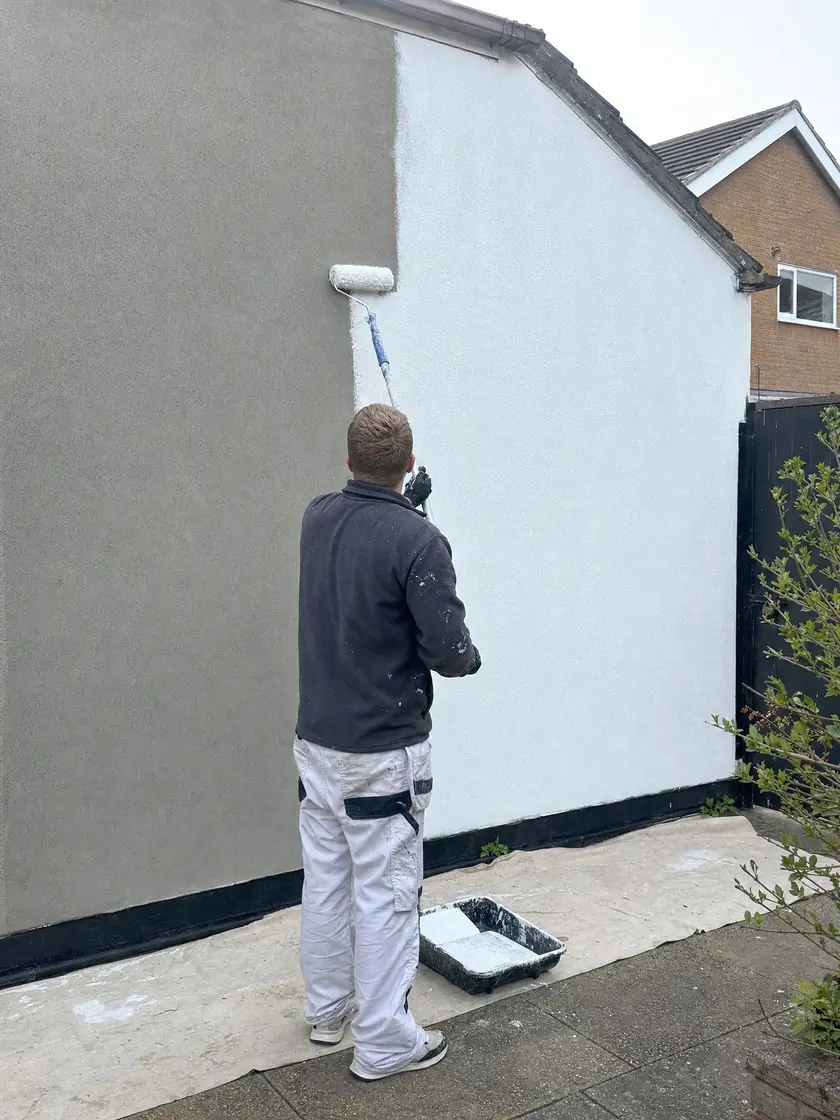
Yes. Once dry, we paint it, because raw traditional sand and cement render is grey and porous. We use outdoor masonry paint, and you should repaint every 5 to 10 years, depending on weather exposure and colour.

Painter seen from behind rolling white masonry paint over raw grey float-finished render on a gable wall
Painted once dry
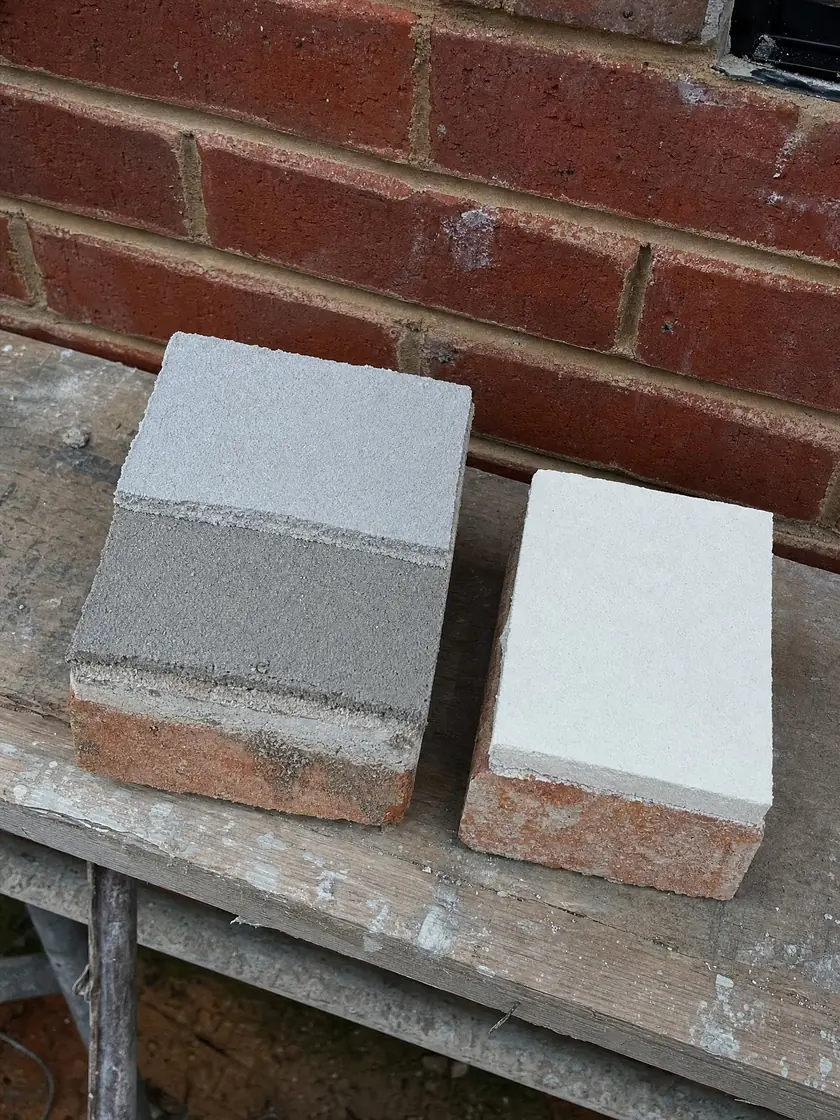
Two cut render samples on a scaffold board: a thick grey sand and cement build-up in layers on a brick slice beside a thin smooth white coat on a second brick slice
Thick coat, thin coat

Sand Cement Render or Silicone Render: Which Suits Your Home?

Silicone is a thin, pre-coloured coat that repels water and is more flexible. It costs roughly £60 to £95 per m². Sand cement render is thicker, harder and cheaper, but it needs painting and can crack where walls move.

Walls letting rain in?Ring us and we will book a free visit.

Why Weather Exposure Matters for External Walls Across the UK

The UK averages about 1,163mm of rain a year, with at least 1mm on around 159 days. Cardiff gets around 1,203mm, Glasgow about 1,153mm, Belfast roughly 939mm across 156 rain days, Manchester near 800mm and Heathrow around 615mm.

From 2016 to 2025, October to March ran 13% wetter than 1961 to 1990, and very wet winter months came about twice as often. Homes with solid masonry walls were twice as likely to report storm-related moisture damage as cavity homes, at 28% against 14%.

About 4.3 million English households reported new moisture damage after intense rain or a storm. A coat of traditional sand and cement render helps protect the wall by keeping that water out.

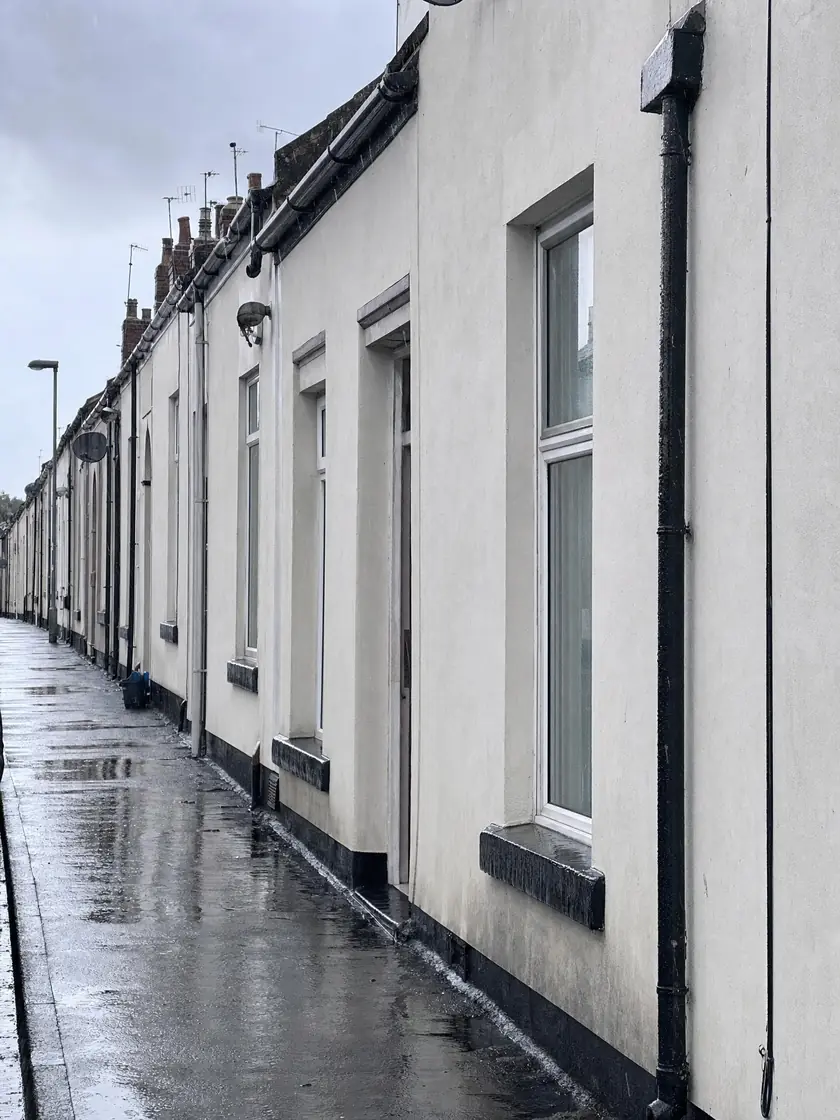
Terrace of rendered houses on a wet day, with rain on the pavement, rain-darkened plinths and a black downpipe
Rain on the wall
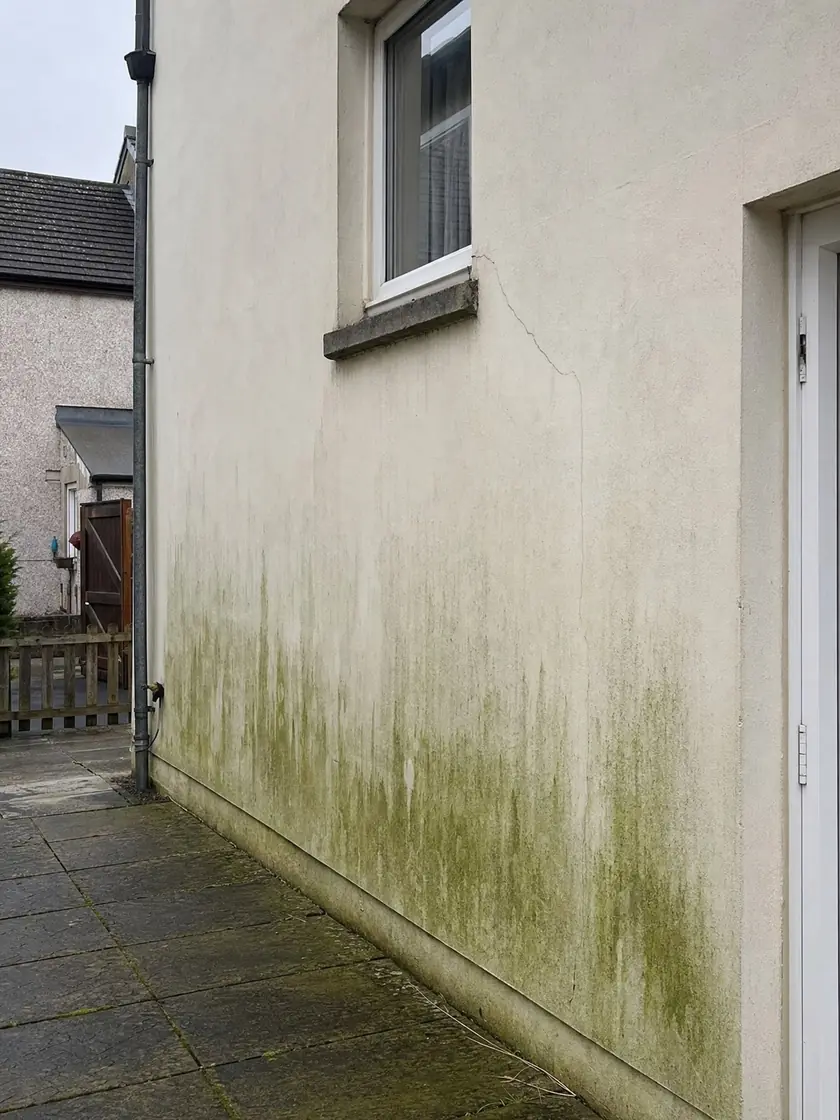
Cream rendered side wall with green algae streaks across the lower half and a fine hairline crack running from a window sill
Wash it when it goes green

How Long Will Sand Cement Rendering Last?

Sand cement rendering lasts for decades. Traditional sand cement render needs ongoing maintenance, so wash it when it goes green and fill hairline cracks early.

Had a vague quote before?We assess each property first and then advise you on the best plan.

How Much Does Sand and Cement Rendering Cost in Sunderland?

These are our rough prices for sand and cement rendering services based on recent projects.

What Do We Charge Per Square Metre?

Traditional sand and cement render ranges from about £35 to £65 per m², with the middle at about £50. Painting adds roughly £10 to £18 per m², and scaffold for a typical house costs £600 to £1,000.

What Does a Typical Project Cost?

A mid-terrace with around 60 m² of wall comes in at about £2,800 to £4,500 before painting. A three-bed semi with about 110 m² runs from £4,500 to £7,500. A four-bed detached house usually lands between £7,000 and £10,000.

Four things move the total cost of sand cement rendering: materials, labour, project size and location.

The price is a rough guide and the actual cost varies from job to job. Please use our contact form for an accurate quote.

Why Homeowners Pick TyneRend as Sand and Cement Render Contractors

We're sand and cement render contractors you can rely on to turn up when we say we will. All the rendering work is carried out by our own team, and our cement rendering specialists explain each stage first.

Our reliable crew has years of plastering and rendering knowledge. We also do whole house rendering as part of our wider rendering services, but this page covers sand cement rendering only.

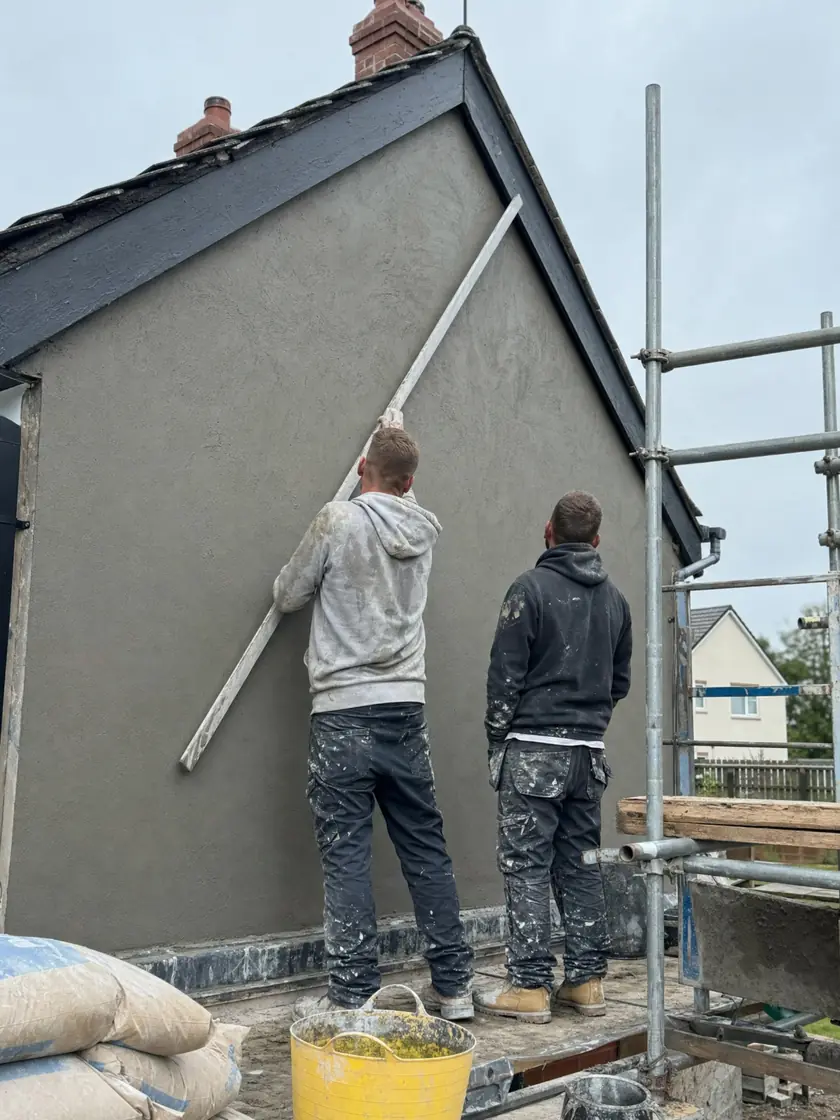
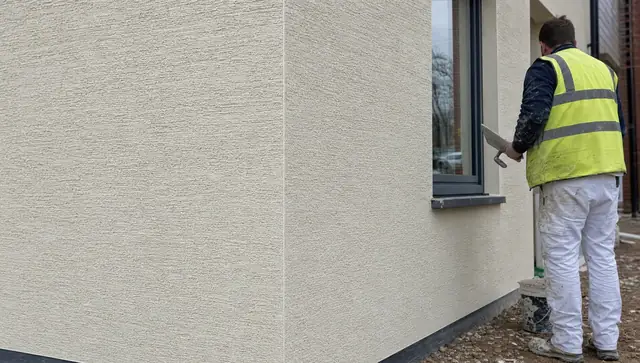
Two renderers seen from behind on a scaffold lift, one holding a long wooden straight edge against a freshly rendered gable wall
Our own team
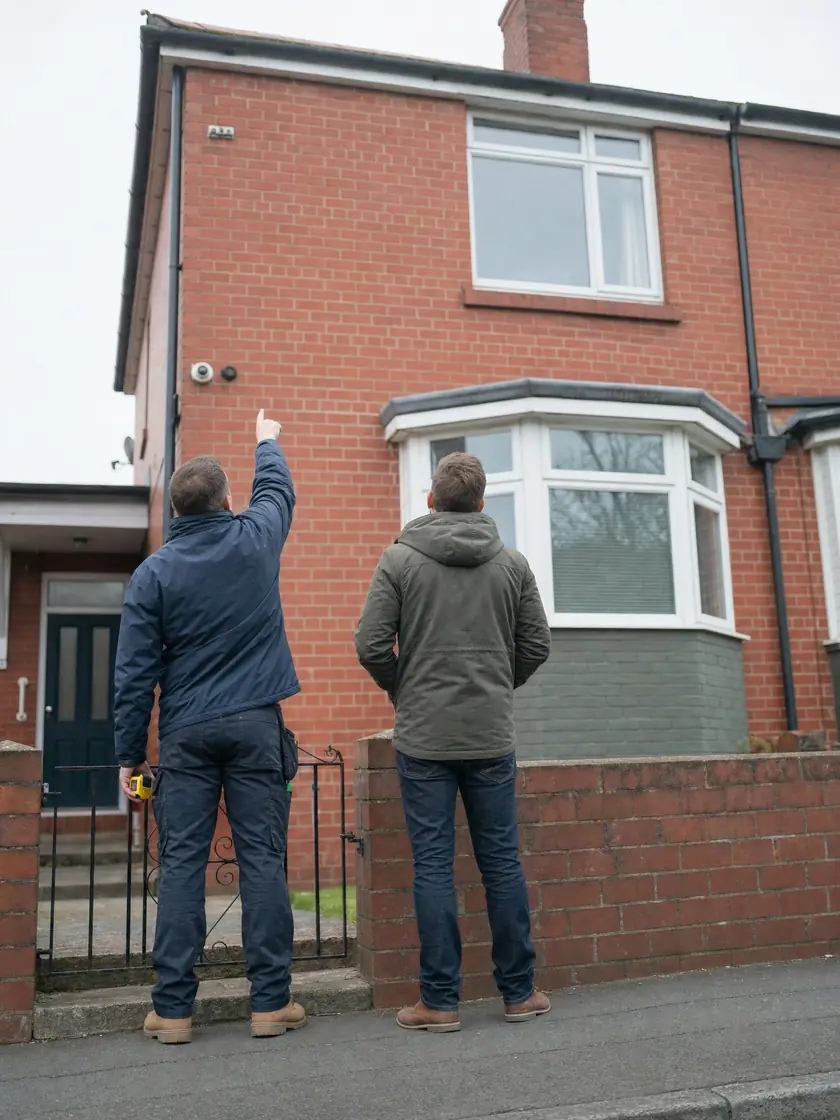
Contractor in a navy jacket and a homeowner in a green parka seen from behind at a garden wall, the contractor pointing up at the brick wall with a tape measure in hand
Free visit and quote

Get Your Free Quote for Sand Cement Rendering From TyneRend

Send us your details through our contact form, and we'll arrange a free visit and a free quote for your Sunderland home.

Our own teamWe mix, apply and finishEvery job is mixed, applied and finished by our own team, and we explain each stage first.
Scratch coatLeft to set before the top coat
Top coatSmooth, textured or sponged
Sand and cement questions

Asked on almost every survey

How much does sand and cement rendering cost per square metre in Sunderland and the surrounding area?

Sand and cement rendering costs about £35 to £65 per m² in Sunderland and the surrounding area, with the middle at about £50. Painting adds roughly £10 to £18 per m², and scaffold for a typical house costs £600 to £1,000. These figures are a rough guide and the actual cost varies from job to job, so please use our contact form for an accurate quote.

How much does it cost to sand and cement render a house?

Sand and cement rendering a house costs about £2,800 to £4,500 for a mid-terrace of around 60 m² before painting, and £4,500 to £7,500 for a three-bed semi of about 110 m². A four-bed detached house usually lands between £7,000 and £10,000. These prices are a rough guide and the actual cost varies, so please use our contact form for a free quote.

How long does sand and cement rendering last?

Sand and cement rendering lasts for decades when it is done properly, but it needs ongoing maintenance. Washing it when it turns green and filling hairline cracks early keeps it in good condition.

Does sand and cement render need painting?

Yes, sand and cement render needs painting, because the raw finish is grey and porous. We paint it once it is dry using outdoor masonry paint, and it is usually repainted every 5 to 10 years, depending on weather exposure and colour.

What is the difference between sand and cement render and silicone render?

Sand and cement render differs from silicone render because it is thicker, harder and cheaper, but it needs painting and can crack where walls move. Silicone is a thin, pre-coloured coat that repels water and flexes more, at roughly £60 to £95 per m². That silicone price is a rough guide and the actual cost varies from job to job.

Can you use sand and cement render on older homes with solid walls?

Yes, you can use sand and cement render on older homes with solid walls, as it is commonly used on older properties, although lime render can suit some period homes better. We check the walls for damp and movement first, then give you a written quote after a free visit.

Tired walls? Let us take a look.

Sand and cement rendering throughout Sunderland, with a free visit and a free quote.

Free survey
Call Free quote